
A sermon preached at Thankful Memorial Episcopal Church in Chattanooga, Tennessee.
Second Sunday in Lent, Year B
Readings: Genesis 17:1-7, 15-16; Psalm 22:22-30; Romans 4:13-25; Mark 8:31-38
“If any want to become my followers, let them deny themselves and take up their cross and follow me. For those who want to save their life will lose it, and those who lose their life for my sake, and for the sake of the gospel, will save it” (Mk 8.34b-35). Last week the adult formation class began looking at Life Together by Dietrich Bonhoeffer, a German theologian and pastor who knew something about taking up his cross and following Jesus, and knew about losing life for the sake of Christ and the gospel. He was executed by the Nazi regime by hanging on April 9, 1945, just three weeks before the Soviets liberated the camp. The legend is that when the dawn came, he whispered to his cellmate, “This is the end. For me, the beginning of life.” He was stripped naked, paraded to the gallows where he said a prayer, and then hanged. Bonhoeffer lost his life because of his dedication to Jesus Christ, which led him to oppose Hitler and the Nazi regime through his writings and lectures, through running an underground and illegal seminary, and through participating in a civilian intelligence network that smuggled Jews out of the country and plotted an assassination attempt on Hitler’s life.
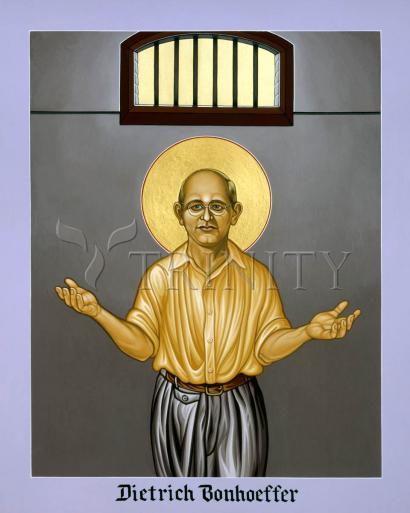
“This is the end. For me, the beginning of life,” said Bonhoeffer as he walked to his death, his cross in the shape of a gallows. And certainly Bonhoeffer walked toward eternal life, toward Paradise with God, toward heavenly rest and his just reward. But the problem with stories like Bonhoeffer’s is that they are extraordinary. Maybe too extraordinary. And when we focus on the extraordinary nature of Bonhoeffer’s life and death, we miss something important. We miss what happens everyday–the very ordinary and often dull moments that make up a life but don’t make it into the legends or headlines. For Bonhoeffer, his march toward the gallows was not the beginning of life, really. For he had life all along. In his everyday and mundane routine, he had life, for he had Christ, the source of Life itself.
In today’s reading from the Gospel according to Mark, Jesus says, “For those who want to save their life will lose it, and those who lose their life for my sake, and for the sake of the gospel, will save it” (Mk 8:35). In the context of the gospels, losing life means, simply, dying. At this point Jesus knows where his journey is taking him. His path of peace will lead to death on a cross. So on a basic level, he’s talking about a literal death. A literal cross. Like Bonhoeffer walking up to the gallows and stepping over the threshold into eternal life.
But Jesus’ words mean more than that, too, for they are also about how we live now. “For those who want to save their life will lose it, and those who lose their life for my sake, and for the sake of the gospel, will save it” (Mk 8:35). This is what we do in our baptisms. We take on the life of Christ, and we lay down our life. And while this is done in a single moment at our baptisms, it is also done daily, in the ordinary and mundane routines and decisions of our lives. It is not flashy. It does not make headlines. It is boring. But it is life.
This life is lived out in discipleship. It requires something of us. It requires following Jesus on the way of the cross, losing our life day in and day out, and taking on the life of God. Everyday we pick up the cross, and find peace. Everyday we lay down our life, and find the life of God. We commit ourselves to God and to God’s mission in the world. We see the work of God around us, discern our calling within that work, participate in that work, and give ourselves away to that work, to one another, and to God.
Bonhoeffer’s life was a life of daily discipleship. It was a life of following God, dedicated to following God despite what was happening all around him. Bonhoeffer laid down his life daily, and daily picked up the life of Christ. He laid down his life in every action, every sacrifice, every conversation, and every prayer. And at the end, when his life was required, he found that he had already laid it down. His life was already given to God, so it could not be taken by evil.
I know someone named Amy. Amy’s job is long-term home care for those with alzheimer’s disease. She takes care of one patient at a time. She keeps up their home. She cooks for them, trying to keep their favorite meals on the menu even with dietary restrictions. She makes sure they are washed and clean. She takes care of their pets, even after they have forgotten they have a pet. She waits with them as their memory fades, until she becomes a stranger. She ministers to the family that is just trying to keep their head up through this most difficult time. She goes to funerals.
If you asked Amy why she does this, she would tell you it’s what God has called her to do. There are no plaques or memorials to honor her; she probably won’t be remembered in any history books. But this is just what she does, day in and day out, year after year, faithfully. She lays down her life bit by bit for these patients who become her friends. She does this the best she can, because she knows when she serves these people in their final years, she is serving Christ. And there is nothing she would rather do. This is her ministry; this is her cross; this is how she lays down her life and follows Christ. And each day, as she lays down her life for Christ and for her friends, she finds the true life of God.
Amy shows us that laying down our lives is not done in a single heroic deed or event. Rather, it is a daily response–in every action, no matter how small or mundane or boring or tiring–to God’s faithful action. In baptism, God reaches out to us. God makes a covenant with us as beloved children of God. And we respond the only way we can: We take up our cross, whatever that looks like in our particular life, and we follow Christ. We lay down what is convenient and take up God’s covenant. We lay down our dreams and take up the dream of God. We lay down our illusions and take up God’s vision. We lay down our life, and take up Christ. And there we find that in Christ is life, the abundant and true life of God.

 Storied Grace