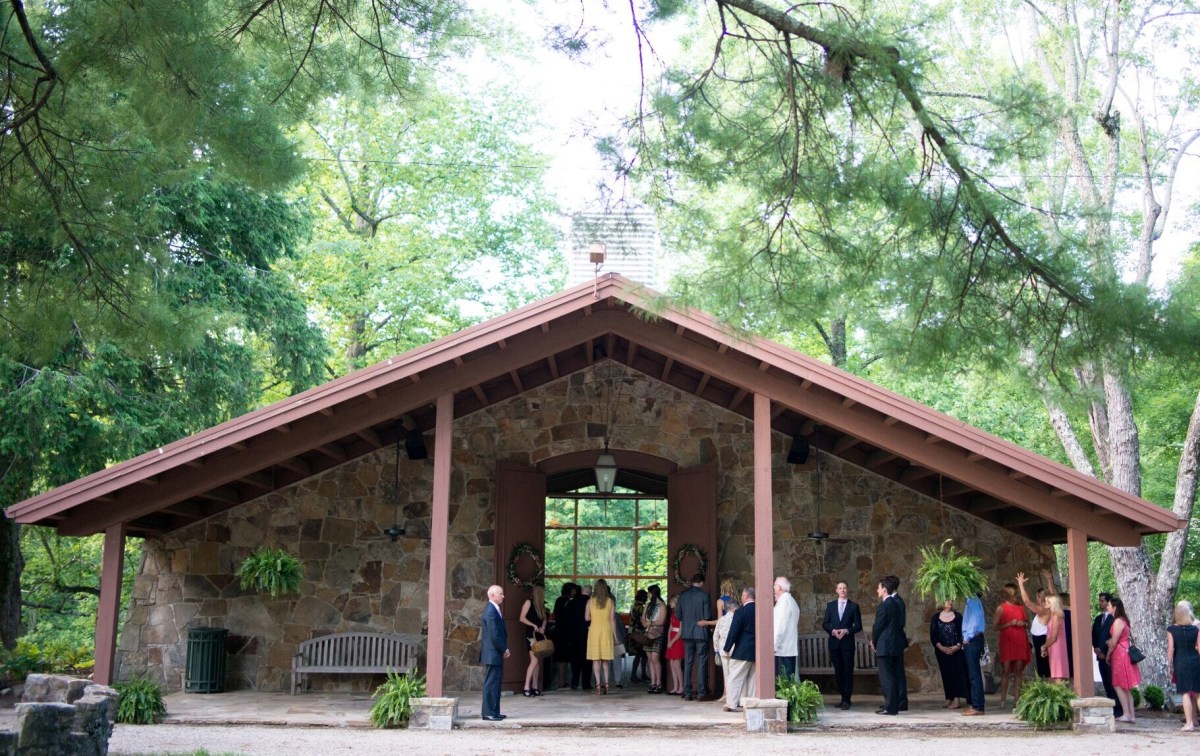
I was honored to be asked to officiate Morning Prayer and preach at the Monteagle Sunday School Assembly on Sunday, August 5. Molly and I so appreciate their warm hospitality.
Readings: Exodus 16:2-4,9-15; Psalm 78:23-29; Ephesians 4:1-16; John 6:24-35
Today’s Gospel reading from John contains some very familiar words from Jesus: “I am the bread of life. Whoever comes to me will never be hungry, and whoever believes in me will never be thirsty.” Jesus’ conversation with the crowds today is on the heels of the feeding of the 5,000, where five barley loaves and two fish from a young boy were multiplied to feed everyone there. When he leaves, the crowds follow him–they seek him out. They’re following him because they’ve seen signs, wonders and miracles beyond imagining. And they want to see more. Jesus knows this, so he admonishes them to look deeper, to look past the signs and wonders, past the oohs and awws and wows, and instead to look at what the signs reveal: Jesus Christ himself.
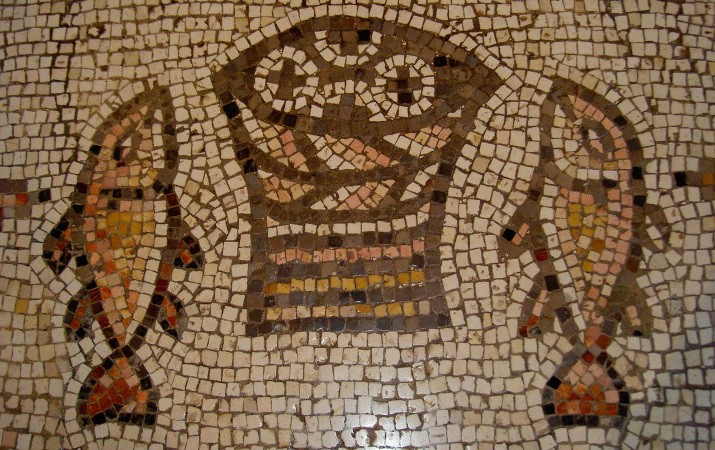
“Do not work for the food that perishes,” Jesus says, “but the food that endures for eternal life.” But they don’t seem to get it. They’re looking for another sign. They remember the manna in the wilderness, and they ask what Jesus is going to do. They just don’t seem to understand completely who Jesus is.
But this is not unusual in John’s Gospel. Throughout Jesus says and does things that confound and confuse. The crowds don’t understand–his own disciples do not understand. We understand more because we know the ending of the story; we read it in the light of the Resurrection. But not so with the people in real time; they will understand later. Jesus is just operating in a different plane. The crowds are talking about bread, but he is talking about himself. The woman at the well is talking about water, but he is talking about himself. Nicodemus is talking about going back into his mother’s womb, but Jesus is talking about being born again. They just don’t get it. They don’t get who Jesus is, that the person standing in front of them is the Son of God, fully God and fully human, who came to Earth to save the whole human race.
But maybe we shouldn’t be too hard on them. Maybe we don’t get it either? Not really. We hear Jesus say that he is the bread of life, and to work hard for the bread of life that endures forever, Jesus himself. But it turns out we like to work really hard for the bread that perishes.
We work hard for prestige. We want people to think the best of us, to only see us with our face on. We hide away certain parts of ourselves, keep them tucked well out of sight. We make sure our dirty laundry, anything that’s embarrassing, is kept out of sight when we have company. We work hard to make and preserve our public image.
We work hard for power. We like to influence. We like people to know who we are, to call on us when they have a problem or need a strong voice, to ask us to serve on their boards and help with their public events. “Call on her,” they might say. “She’s a pillar in the community.” We like that.
 In short, we work hard to build our own kingdoms. I’m reminded of the recent Broadway musical “Hamilton.” It portrays well Alexander Hamilton’s endless pursuit of leaving a legacy, something that will outlive him and enshrine him in history. We’re not so different, are we?
We work hard for the bread that perishes, that does not endure. We get some satisfaction–after all, all of these things are good. It is good to have a good name, to influence decisions, to leave a legacy. Those are good things. But that stuff ultimately falls away; it perishes.
But today’s invitation is this: Don’t work so hard for that stuff that perishes. Work for the bread that endures forever. Come to Jesus.
That’s not an easy thing to do. Let’s not fool ourselves. It’s easy enough, I suppose to come to church on Sunday and listen to some annoying seminarian talk. Maybe the hymns are good, and we can’t miss that great potluck.
But that’s not what Jesus is talking about. Jesus is talking about reorienting our entire lives and dedicating ourselves wholly, completely, to him. Jesus is talking about a radical change. The English poet and priest George Herbert said it this way: “Seven whole days, not one in seven, I will praise thee.” Jesus is calling us to turn ourselves completely over to him, to dedicate our lives solely to him. Jesus is calling us to stop playing in the sand, to stop building our own castles, our own kingdoms.
We have been called to work for the Kingdom of God. Seven whole days, not one in seven. All of ourselves, not just part of us. Faithful to the end, not just when it’s convenient. Choose the bread that endures forever.

“I am the bread of life. Whoever comes to me will never be hungry, and whoever believes in me will never be thirsty.” What an invitation; what a calling. It’s a daily and persistent invitation to grace, to abundant and eternal life in Christ.
We choose to answer this calling in big moments in our lives, when we choose to make one of those life-altering and defining decisions, and chiefly in the sacraments of the Church. But we also choose to answer this calling, to respond to this invitation, in the daily, boring, normal decisions of our everyday lives, when no one is looking, when we are not even thinking about how this seemingly small choice will impact our lives later.
Last week my wife and I helped at a choir camp in Arkansas. In addition to learning sacred music and singing for a service at the end of the week, the kids put on a Broadway review. This year’s show was about finding those small moments in our everyday lives when we can choose faith, hope, and love, when we can reach out to others with the love that God has shown us.
The final number was “Seasons of Love” from Rent. I’m sure you’ve heard the song. 525,600 minutes… the song asks how best can we measure and mark the passage of time in our lives. The answer: In acts of love. It’s a powerful piece, in no small part because of its association with Rent. Four of the lead characters had HIV or AIDS, and the play tracks the devastating effects of the epidemic in New York City at a time when most people would rather look away in fear.
We choose Jesus Christ when we choose not to look away, when we choose love instead of fear, when we embrace the other, especially those unlike us. That’s when we choose the bread that endures forever. It’s in the small, everyday moments. Rowan Williams said it this way: “Our faith … depends on the possibility of meeting Christ in any and every place, and in any and every person. The degree to which we fail to find him, see or hear him, in anyone, is the degree to which we have not grasped–or rather yield to, been grasped by–his Lordship.”*
When Jesus Christ is our Lord, we can serve and love our neighbor completely and freely. When Jesus Christ is our life, we can die to ourselves, because we know we will live forever with him.When Jesus Christ is our bread, we can give ourselves away.
Today is your last Sunday together as a summer community. You are going back to your respective communities. Why not take up the challenge this year? Choose the bread that endures forever. In those everyday moments, in encounters with other people, especially those unlike us, choose Jesus Christ. Choose to see him shining in their lives. Look for him, and don’t stop looking until you find him; he’ll show up. Choose Jesus everyday, because he has chosen us, you and me, day after day after day, for all eternity.
*Rowan Williams, The Truce of God (London: Collins/Fount, 1983), 33.

 Storied Grace