We look for God and find God where we do not expect: in a beaten, tortured man on a cross, in a dead man laid in a borrowed tomb.
A sermon preached on Palm Sunday at Thankful Memorial Episcopal Church in Chattanooga, Tennessee.
This is not what we expected.
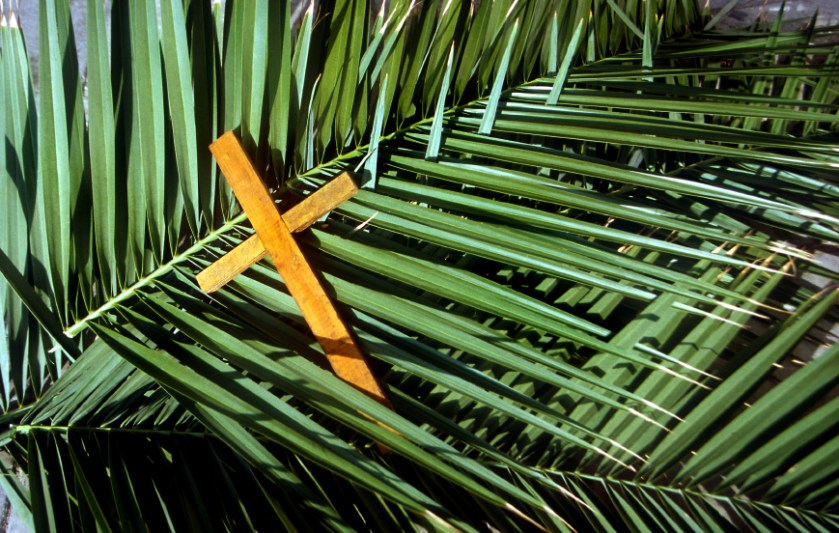
“This is not what we expected,” said the crowds that laid down palm branches and cloaks to herald the Messiah on a donkey, who now hangs suspended between heaven and earth on a Roman cross. The victorious conqueror they imagined appears to be vanquished and conquered, breathing his last, yet another example of the brutality of the Roman Empire in their occupied land.
“This is not what we expected,” said the twelve disciples as Jesus took bread and wine at a familiar feast, and said, this is my body, this is my blood. They revolted at the announcement that Jesus was near death’s door. They took offense at his claim that they would desert him.
“This is not what I expected,” said Peter after the arrest, as he followed Jesus from the garden to the courtyard. He thought he could stay by Jesus’ side, but he denied–one time, two times, three times–I do not know the man.
“This is not what I expected,” said Pontius Pilate, as he washed his hands. Here was a man in which he could find no fault, and yet the crowds cry, crucify him, and give us Barabbas.
“This is not what I expected,” said Simon of Cyrene, a passing visitor in town for the Passover, as he was forced to pick up the cross from a struggling man, badly beaten, whom he had never seen. Simon would be bathed in the blood of this man sent to die for reasons Simon didn’t even know.
“This is not what we expected,” said the women at the foot of the cross, as they watched Jesus suffer, cry out to God forsaken, and die. Their grief and shock were overwhelming. And how could they, all women, be the only followers of Jesus there?
“This is not what I expected,” said the Centurion at the cross, as the sky turned black, as the veil of the Temple was torn in two, as the earth shook. “Truly this man was God’s Son,” he said as he watched the lifeless body of Jesus, still nailed to the tree. And yet this Roman soldier confessed who Jesus is: the Son of God.
“This is not what I expected,” said Joseph of Arimathea, as he led a group with the body of Jesus to a new tomb. Joseph thought that he would lie there with his family, but now this great teacher lies there instead.
Is this what we expected? Did we expect that God would become man and die? Did we expect that God’s power would be shown in weakness, in pain, in suffering, in death?
Palm Sunday reminds us that this story we know so well, the story we tell week after week at the Eucharist, is something unexpected. God in Jesus Christ subverts what we think of power and strength, for in Jesus Christ power is shown in submission, and strength is shown in weakness, even to the point of death. We look for God and find God where we do not expect: in a beaten, tortured man on a cross, in a dead man laid in a borrowed tomb.
It is still in the unexpected that we find Jesus. We find him in those places where we don’t tend to look, in forgotten places, in unseen corners of the world. We find him in people who do not look like us, who are so different than us, in the faces of the poor and the oppressed. We find him in ourselves, staring back at us in the mirror, in the middle of our broken lives. We find him in our suffering, in our pain, and in our death.
This is not what we expected. This is not who we expected–God Incarnate, riding into our lives on a donkey. God Incarnate on a cross, sharing our death.
Today, we remember and celebrate all that is unexpected about Jesus as we are invited, once again, to walk his final steps to his death with him through this Holy Week. Come and see and be surprised to discover the depths of his Passion for us, the great shock, the great Unexpected Event, that awaits us all on the other side of his cross.
We understand that this radical forgiveness is not easy. It is not something to shrug off. Sometimes it is absurd.
A sermon preached on the Tuesday in the third week of Lent at the Chapel of the Apostles in Sewanee, Tennessee.
Readings: Song of the Three Young Men 2-4, 11-20a; Psalm 25:3-10; Matthew 18:21-35
A video of this sermon in Spanish can be found here.
In the Gospel reading today, there are many differences between the Spanish and English versions. It is important to know that the English version is more accurate, because it is closer to the original Greek than the Spanish version.
In reality, the functionary is already a slave. This slave must pay the king a debt that he cannot pay. This debt is absurd. It is equal to 150,000 years of work. Certainly, it is impossible for the slave to pay the debt in this life. Impossible. So the king forgives his debt.
Then upon leaving, the slave meets another slave who owes him, in the Spanish version, a small sum. Relative to the debt the slave owed the king, this is true. But this debt is equal to 100 days of work. It is not small, but it is significant. The average worker in the United States makes $35,000 each year. 100 days of work is equal to approximately $13,000. This is not a small sum in reality. It is significant. To forgive this debt is difficult. To forgive is no doubt a sacrifice. To forgive this debt has real consequences for life.
It is important to remember this–to remember that to forgive is a sacrifice with real consequences for our lives. If we are honest, to forgive such a debt is absurd for us.
But that’s the point. Jesus tells Peter to forgive not seven times, but seventy-seven times. When we shed our self-righteousness and are honest with ourselves, we understand that this radical forgiveness is not easy. It is not something to shrug off. Sometimes it is absurd.
And it always has real consequences for our lives. Forgiveness means that we must die. This is a consequence. But when we forgive, especially when it is not easy, forgiveness means we will live. This is also a consequence.
May we live in the same way we pray: Forgive us our sins, as we forgive those who sin against us. For there is the path of eternal life.
Laying down our lives is not done in a single heroic deed or event. Rather, it is a daily response–in every action, no matter how small or mundane or boring or tiring–to God’s faithful action.
A sermon preached at Thankful Memorial Episcopal Church in Chattanooga, Tennessee.
Second Sunday in Lent, Year B Readings: Genesis 17:1-7, 15-16; Psalm 22:22-30; Romans 4:13-25; Mark 8:31-38
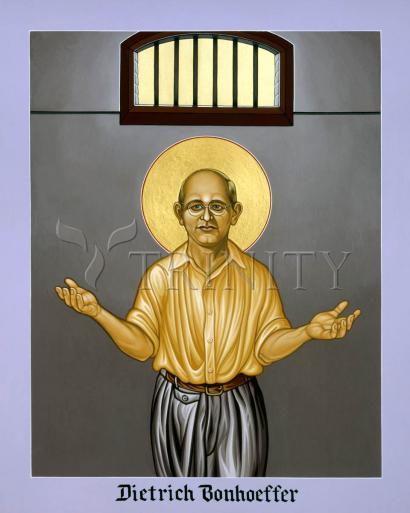
“If any want to become my followers, let them deny themselves and take up their cross and follow me. For those who want to save their life will lose it, and those who lose their life for my sake, and for the sake of the gospel, will save it” (Mk 8.34b-35). Last week the adult formation class began looking at Life Together by Dietrich Bonhoeffer, a German theologian and pastor who knew something about taking up his cross and following Jesus, and knew about losing life for the sake of Christ and the gospel. He was executed by the Nazi regime by hanging on April 9, 1945, just three weeks before the Soviets liberated the camp. The legend is that when the dawn came, he whispered to his cellmate, “This is the end. For me, the beginning of life.” He was stripped naked, paraded to the gallows where he said a prayer, and then hanged. Bonhoeffer lost his life because of his dedication to Jesus Christ, which led him to oppose Hitler and the Nazi regime through his writings and lectures, through running an underground and illegal seminary, and through participating in a civilian intelligence network that smuggled Jews out of the country and plotted an assassination attempt on Hitler’s life.
“This is the end. For me, the beginning of life,” said Bonhoeffer as he walked to his death, his cross in the shape of a gallows. And certainly Bonhoeffer walked toward eternal life, toward Paradise with God, toward heavenly rest and his just reward. But the problem with stories like Bonhoeffer’s is that they are extraordinary. Maybe too extraordinary. And when we focus on the extraordinary nature of Bonhoeffer’s life and death, we miss something important. We miss what happens everyday–the very ordinary and often dull moments that make up a life but don’t make it into the legends or headlines. For Bonhoeffer, his march toward the gallows was not the beginning of life, really. For he had life all along. In his everyday and mundane routine, he had life, for he had Christ, the source of Life itself.
In today’s reading from the Gospel according to Mark, Jesus says, “For those who want to save their life will lose it, and those who lose their life for my sake, and for the sake of the gospel, will save it” (Mk 8:35). In the context of the gospels, losing life means, simply, dying. At this point Jesus knows where his journey is taking him. His path of peace will lead to death on a cross. So on a basic level, he’s talking about a literal death. A literal cross. Like Bonhoeffer walking up to the gallows and stepping over the threshold into eternal life.
But Jesus’ words mean more than that, too, for they are also about how we live now. “For those who want to save their life will lose it, and those who lose their life for my sake, and for the sake of the gospel, will save it” (Mk 8:35). This is what we do in our baptisms. We take on the life of Christ, and we lay down our life. And while this is done in a single moment at our baptisms, it is also done daily, in the ordinary and mundane routines and decisions of our lives. It is not flashy. It does not make headlines. It is boring. But it is life.
This life is lived out in discipleship. It requires something of us. It requires following Jesus on the way of the cross, losing our life day in and day out, and taking on the life of God. Everyday we pick up the cross, and find peace. Everyday we lay down our life, and find the life of God. We commit ourselves to God and to God’s mission in the world. We see the work of God around us, discern our calling within that work, participate in that work, and give ourselves away to that work, to one another, and to God.
Bonhoeffer’s life was a life of daily discipleship. It was a life of following God, dedicated to following God despite what was happening all around him. Bonhoeffer laid down his life daily, and daily picked up the life of Christ. He laid down his life in every action, every sacrifice, every conversation, and every prayer. And at the end, when his life was required, he found that he had already laid it down. His life was already given to God, so it could not be taken by evil.
I know someone named Amy. Amy’s job is long-term home care for those with alzheimer’s disease. She takes care of one patient at a time. She keeps up their home. She cooks for them, trying to keep their favorite meals on the menu even with dietary restrictions. She makes sure they are washed and clean. She takes care of their pets, even after they have forgotten they have a pet. She waits with them as their memory fades, until she becomes a stranger. She ministers to the family that is just trying to keep their head up through this most difficult time. She goes to funerals.
If you asked Amy why she does this, she would tell you it’s what God has called her to do. There are no plaques or memorials to honor her; she probably won’t be remembered in any history books. But this is just what she does, day in and day out, year after year, faithfully. She lays down her life bit by bit for these patients who become her friends. She does this the best she can, because she knows when she serves these people in their final years, she is serving Christ. And there is nothing she would rather do. This is her ministry; this is her cross; this is how she lays down her life and follows Christ. And each day, as she lays down her life for Christ and for her friends, she finds the true life of God.
Amy shows us that laying down our lives is not done in a single heroic deed or event. Rather, it is a daily response–in every action, no matter how small or mundane or boring or tiring–to God’s faithful action. In baptism, God reaches out to us. God makes a covenant with us as beloved children of God. And we respond the only way we can: We take up our cross, whatever that looks like in our particular life, and we follow Christ. We lay down what is convenient and take up God’s covenant. We lay down our dreams and take up the dream of God. We lay down our illusions and take up God’s vision. We lay down our life, and take up Christ. And there we find that in Christ is life, the abundant and true life of God.
Our song is not one of naive and cheap optimism, but one that springs from a secure hope in a God who bears our pain and shares our joy. It is a song with the cross and the resurrection in view. And from that place of hope, we offer our lives as a song of love and praise to God.
THE FEAST OF THE PRESENTATION OF OUR LORD February 2, 2018 Chapel of the Apostles Sewanee, Tennessee
Readings: Psalms 42-43, I Samuel 2.1-10, John 8.31-36
Today Hannah sings a song of triumph and confidence in the power and love of God, a song of reversal of the status quo, a song of justice and mercy. But let’s rewind the story a little. Hannah’s deepest desire is to have a son. She prays for a son. She travails before God. She weeps bitterly, and she vows that if God would give her a son, she will set him apart as a nazirite before God. God hears her, and she gives birth to Samuel. Once Samuel is weaned, she takes him to the priest Eli. And then she sings. Her heart breaks out into doxology, it overflows with praise to God.
When God shows up, when God breaks into our everyday lives, when the glory of God makes the world shine, how can we keep from singing? How can our hearts not overflow with praise? How can our thankfulness not spill out into melody?
But the temptation here is to embrace a sort of prosperity gospel, where praise is abundant when things are great, but a desert when our lives seem to have more valleys than mountaintops. And yet sometimes, like Hannah, we have to weep bitterly before God. We need to bear our hearts to the One who always hears, who already knows.
This is doxology, too. This is praise, too. This is part of Hannah’s Song. Hannah’s weeping and crying out to God is in the confidence that God hears, that God knows, that God understands. Her words today are an affirmation of this: God does indeed hear, especially those of low estate, those who weep bitterly, those who cry out, those who fear the worst. God is there. The glory of God shines there, too.
Wherever we are in our lives, whether in a moment of blessing, or a place of grief, fear, or pain, God is there. And we sing our song. Our song is not one of naive and cheap optimism, but one that springs from a secure hope in a God who bears our pain and shares our joy. It is a song with the cross and the resurrection in view. And from that place of hope, we offer our lives as a song of love and praise to God. You are God; we praise you. You are the Lord; we acclaim you.
A central part of what it means to follow Christ in Corinth or in Chattanooga is to consider the needs and concerns of our brothers and sisters in Christ above our own, so that we bear one another’s burdens and celebrate one another’s joys. At its greatest depth, love in Christ means sacrifice.
Thankful Memorial Episcopal Church
Chattanooga, Tennessee
The Fourth Sunday after the Epiphany, Year B January 28, 2018 Readings: Deuteronomy 18.15-20, Psalm 111, I Corinthians 8.1-13, Mark 1.21-28
Corinth was like the Las Vegas of the ancient Mediterranean world. It was a racey place, a wild city with a reputation, but also a business center. And as such, it attracted people from all over. And these diverse people brought their gods with them. Scholars say that there would have been innumerable shrines to innumerable gods in the city. And no one was worried about being mutually exclusive. It was sort of like an endless religious buffet of whatever suited you at that moment.
In today’s passage from I Corinthians, Paul writes to people who live and work and worship in this context. They are new to this Way of following Christ. And they are arguing about a lot of things, like eating meat sacrificed to countless idols in the city. So they ask Paul: Should we eat meat sacrificed to idols? Or shouldn’t we? It seems simple enough, and yet it is not. The rich would accept social invitations to dine in the temples, and these opportunities were a chance for social advancement. As for the poor, the only time they might eat meat was when it was distributed at public religious festivals after it had been sacrificed to idols.
So the question about eating meat is a serious one for the Corinthians. It is about the worship of idols, certainly. In eating this meat that was sacrificed to an idol, am I being unfaithful to the one, true God? But it is about other things, too. What happens if my friends invite me over to the neighborhood temple? Do I decline the invitation for my own religions reasons or can I accept it? Can I eat the only meat I’m likely ever to get, despite the fact that it’s given in the name of another god? What should we do? These are not abstract questions. The issue affects the nitty-gritty of daily life in Christ. At the root of all of these questions is, how do I follow Christ in Corinth?
St. Paul gives an interesting answer to all of this. On the one hand, he says, it doesn’t matter. They’re just idols. There is only one, true God, and as long as you know that, it’s okay. You have freedom in Christ. But on the other hand, eating this meat might cause division in the assembly. There are some who are not sure about this, who are trying to feel their way around this issue. Don’t boast that you’re further along than they are, that you figured it out first. You might hurt them, and if you do that, you’re hurting Christ. So, Paul concludes, I’m not going to eat the meat, even if I have the freedom to do that. My relationship with my fellow Christ-followers is too important. We’re connected, and I am not going to do something that hurts them. I’m going to limit myself out of my love for them. I’m going to make my own sacrifice. And St. Paul is asking them to do as he does: limit themselves out of their love for others in the assembly, despite the sacrifice of social status or opportunities for advancement.
And there it is, the answer: a central part of what it means to follow Christ in Corinth or in Chattanooga is to consider the needs and concerns of our brothers and sisters in Christ above our own, so that we bear one another’s burdens and celebrate one another’s joys. At its greatest depth, love in Christ means sacrifice.
This is what it means to be the Church. We are a community of believers who strive to follow Christ, brothers and sisters baptized into Christ’s death and resurrection, a family of very different people with the same mission of representing Christ to one another and to the world. We are a communion of love–not the sentimental love of romantic comedies, but a love that loves until the end, no matter the cost, despite our differences, a love that makes sacrifices.
But we can’t do this on our own. I once heard about a group of nuns living in New York City. They provided social services to a very poor, rundown, and frankly forgotten area of the city. They had moved there a long time ago, when the neighborhood looked pretty different. They stayed when the grocer down the street decided to close up shop. They stayed when the school consolidated with another school because there weren’t enough teachers. They stayed when social services moved in and then moved out again. They stayed as their own resources dwindled, and as calls for them to move to a better part of town mounted. The nuns stayed through it all. A researcher was intrigued by what gave them their staying power, and asked one of the aging nuns in the bunch, “Everyone is gone, but how do you stay? How are you able to go on, seemingly without getting burned out or giving up?” They answered, “We love the people here.” “Yes, I’m sure you do,” the researcher replied. “But so did the grocer, and the teachers at the school who left, and all of those people in those nonprofits that moved out. How is your love different?” “Well,” the nun replied, “These people are my family… And I pray a lot. I have felt the love of God, so I know there’s plenty to go around here.”
Perhaps what the nun was getting at is this life of sacrificial love does not depend on our own strength alone–indeed, it can’t depend on our strength alone. In our baptisms, we are invited to share in the very life of God, a life which is endless and infinite Love between Father, Son, and Holy Spirit–a Love that we are caught up in, that we are pulled into, that reaches out to us and feeds us, a love that connects us to one another as brothers and sisters and makes us children of God. We all share in this love, and it is from God’s love that we are able to love one another. Because of that we can bear one another’s burdens, we can love no matter the cost. We can love our life away, because we are connected to the very source and Lord of Life.
But we should not fool ourselves. This way of life, this way of loving every day, of making sacrifices for our brothers and sisters around us, leads us down the way of the cross, down the way of giving all for the sake of another, down the way of laying down one’s ambitions, one’s hopes and dreams, and one’s very life for another. And in a world so concerned about the self, about getting ahead, about getting a competitive advantage or the upper hand, there could be nothing more counter-cultural, no way of life more radical. And yet we find, at the end of that way of love that holds nothing back and sacrifices all, there we find nothing but life and peace–the life and peace of God.
There was a deeper cosmological reality than Empire and War. Death and Evil, even at that darkest moment, did not reign. Jesus Christ reigns. God has the last word. And to that, the Church is a witness.
THE CONFESSION OF ST. PETER THE APOSTLE January 18, 2018
Chapel of the Apostles
Sewanee, Tennessee Readings: Acts 4.8-13, Psalm 23, I Peter 5.1-4, Matthew 18-19
Tonight we hear two straightforward questions. First, Who do people say that the Son of Man is? Some say you’re John the Baptist. Others say you’re Elijah, or maybe Jeremiah or one of the prophets. But then Jesus ups the ante. But who do you say that I am? The theorizing is over. Jesus is staring into the eyes of these men, his friends and disciples, who had followed him around, heard him teach, seen him heal, been amazed and confused and bewildered. After all of this, who do you say that I am? Maybe it was like those moments in class, when the professor asks a question that seems so obvious on one level, almost rhetorical. Except it’s not a rhetorical question–they want a real answer, and they’re looking at you, but you can’t quite form the words, so you pretend to scribble something down in your notebook and hope they move on to the next person in the row? But who do you say that I am? St. Peter speaks up for the twelve, speaking those words that God had written on his heart, had placed on his lips: You are the Messiah, the Son of the living God.
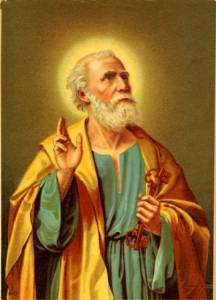
An icon of St. Peter the Apostle, with the keys to the Kingdom.
It is a divine revelation. Jesus is not only a wisdom teacher or preacher of peace. He is not only a healer and worker of wonders. He is not only a teacher of the Law who proclaims the Kingdom of God. Beneath the teachings, the sayings, the signs, there is a deeper reality–a reality to which all of these things point. He is Messiah. He is the Son of God. He is Lord. Such a confession is a gift from God. It is the foundation of the Church, and it is our gift today.
Our modern ears can miss, however, the radical and inherently political nature of this confession. Messiah invokes a whole history of expectation, of hoping for deliverance from the violence of political oppression. Son of God is just as political. It was a title Caesar had taken for himself–Caesar, Son of God, Savior of the World. To say Jesus was Messiah and the Son of the living God set Jesus up against Rome. It set his followers up against Caesar. In a world dictated by the fist of Rome, where peace and order were brought and maintained by brutality, terror, fear and violence–in such a world, Peter is confessing a deeper reality. He is confessing the central reality of the cosmos: Jesus is Lord. And in so doing, he is rejecting the power of Empire, the power of Caesar, and casting them down as idols. He is rejecting this power, and confessing the power of God, the power of Love Divine, and, though he does not know it yet, the power of the cross.
Who do you say that I am? This is not a moot question today. On the contrary, it could not be more relevant. In the face of war, violence, oppression, fear, and evil, we are asked the same question: Who do you say that I am? What reality will we confess? Will Empire encroach on the Kingdom of God, Caesar on the sovereignty of Christ? Never.
Some friends and I once visited eastern France to see the battlefields of World War I. We stopped in a small village where a museum of the Great War was located, but it was lunch, so in typical French fashion, everything was closed for two hours. Knowing that we had limited time there, we set off to grab a panini and do a small walking tour of the village. When I bought the panini, I asked the vendor to point me to the church, an obvious first stop for me. He pointed me down a small, downhill road sandwiched between tiny shops. In no time we came to the edge of the village, and there was the small stone church, situated at the edge of town, which is unusual for any French town I have ever visited. The church was in a field, just beginning to sprout green with the Spring weather. But not the field next to it. Its soil had this chalky look. Nothing seemed to be growing. And I noticed that all the countryside was checkered with these chalky fields between green fields. Across the street from the church, there was a barbed wire fence, with the same chalky soil. Inside were small trees and bushes, each with thorns wrapped around them, choking them. And on the fence, a sign: “Do not enter. Danger of death.” On the other side of this fence among the thorns, I read, it was possible that there was still live ammunition on the ground, waiting to be disturbed, waiting to fulfill its evil purpose, live ammunition from the Great War 100 years ago.
A example of one of these many signs in the region.
The small stone church had been destroyed during the Great War. It used to be in the middle of town, like in all small towns in France. But after the War, they decided to rebuild it here, where trenches had once snaked their way across the field; where the soil seemed useless, unable to recover; where live rounds of ammunition still lurked about; where Death and War seemed to reign. In the middle of all of this, a small stone church.
The small church pointed to something deep, something true. There was a deeper cosmological reality than Empire and War. Death and Evil, even at that darkest moment, did not reign. Jesus Christ reigns. God has the last word. And to that, the Church is a witness.
Who do you say that I am? We say that you are the Messiah, the Son of the living God, who dying and rising destroyed the power of sin and death, and led captivity away captive. But in the aftermath of the war, in the face of such destruction and death, surely such a confession was hard. Maybe it was only a whimper, a whisper of hope. So it seems with us sometimes. We confess that Jesus is Lord, but some days it is easier than others. And over our lifetimes, it is a confession we grow into, day by day, by the grace of God and the power of the Holy Spirit.
As I was walking out of the church, I ran into a woman. I asked her for directions, and she pointed us to our destination. My accent gave me away as a foreigner, though: “You’re Canadian, aren’t you?” She asked if I liked the church. Her grandfather had helped rebuild it after the War. He came back scarred, she said. He was a gueule cassée, one of those words you read in French literature or history books. Roughly translated, it means broken face, except gueule is only used for animals, like dogs. These were men who came back with unrecognizable faces, disfigured because of injuries in the war—some 15,000 Frenchmen in World War I alone. When he came back, all he wanted to do was rebuild the church, she said. He couldn’t let the war have the last word.
What a confession—a confession of the power of God, the power of Love Divine. Despite his brutal experience with war, his actions were a confession that Empire and Death were not Lord, but Jesus is Lord. Sin and Evil do not reign, but Christ reigns. Maybe it was a whimper at first, but I would like to think that with every stone his confession grew stronger and stronger, each stone squashing the power of Hell, a Hell already vanquished by the death and resurrection of Jesus Christ.
A statue at Mont St. Michel of St. Michael slaying the Dragon.
We do not approach life with a naivete that refuses to see the evil in the world or in our lives. We are not blind to sin and the effects of sin. Yes, we see–we experience sin and evil in a real, even personal, way. But we know that it does not have the last word. Our lives are a testimony that God has the last word. Our lives are a confession that Jesus is Lord. Like each stone of that small church in the battlefield, each day of our lives builds up and upon the witness of the Church, squashing the very power of Hell.
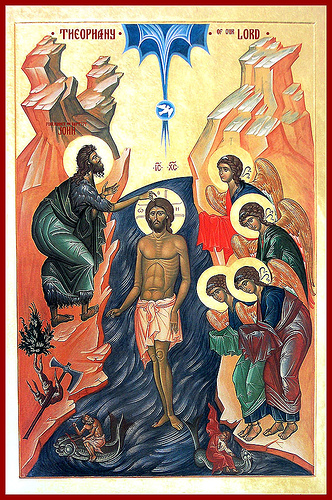
A sermon preached at Thankful Memorial Episcopal Church in Chattanooga, TN, for the first Sunday after the Epiphany, the Baptism of our Lord. Readings: Genesis 1.1-5, Psalm 29, Acts 19.1-7, Mark 1.4-11.
An Eastern Orthodox icon of Jesus being baptized by John in the Jordan River.
Today is a day of beginnings. It’s the first Sunday of 2018. It’s the first Sunday after the Epiphany. It’s the first Sunday you get to deal with a new seminarian. But of course, we have been dealing with beginnings for a couple of weeks now. Two weeks ago today, we heard the story from Luke’s gospel of Jesus’ birth in Bethlehem. Last week in John’s gospel, we heard that Jesus is the incarnation of the Word of God, who has been with God forever, the Word that God spoke in creation, enfleshed for us, fully God yet fully human.
But Mark’s gospel begins differently. We do not begin in Bethlehem, as we do in Matthew or Luke, nor do we begin before time and creation, as in John. Instead, we begin with John the Baptizer and the baptism of Jesus in the Jordan River. We are barely a few verses into the gospel according to St. Mark. John proclaims a baptism of repentance, promising that one who is more powerful is coming after him, a Messiah who will baptize with the Holy Spirit. And suddenly, almost nonchalantly, Jesus is there, in the water, being baptized. But as he is coming out of the water, something miraculous happens. Reality is ruptured, the normal order and pace of things are upended, and the Divine breaks into the world powerfully. The heavens are torn apart. The Holy Spirit alights on Jesus, as softly as a dove landing. And God the Father speaks, “You are my Son, the Beloved; with you I am well pleased.” And just like that, as quickly as a blink of the eyes, in the course of our routine lives, God reveals what has always been there, just beyond our understanding, just out of our sight. God reveals God’s Self to us: God the Father speaking, God the Son in our humanity, God the Holy Spirit descending.
What an incredible thing. This is Jesus’ first act of public ministry in Mark: he steps into the muddy waters of the Jordan River and is baptized by John. And this is a symbol for all of Jesus’ ministry, from his birth until his death. Jesus chooses to get into the dirty water with us. Jesus chooses to be fully like us, to take on our human nature completely. God chooses to come to us, not to remain aloof from us, but to share in our life with us.
Many of us were baptized with beautiful fonts, by priests or bishops vested in fine clothes. Some of you may have the shell that might have been used to baptize you. There was likely beautiful music. Perhaps there were Easter lilies around the font. All very dignified and right and good. But let me tell you about a friend who had a different experience. Tessa did not grow up in the Episcopal Church. She grew up in a little country church with no more than 25 people on a given Sunday. There wasn’t a pipe organ; instead, there were tambourines, accordions, and enthusiastic singing. When she was baptized at 12 years old, there were no Easter lilies or flowers of any kind. They went out into a garage connected to the church. It was in the dead of winter, cold. And there was a horse trough. She was baptized in a horse trough.
Tessa was baptized there, in the Name of the Father, and of the Son, and of the Holy Spirit. And just like all of the baptisms I have witnessed in beautiful, warm Episcopal churches, her baptism was dignified and right and good. But I must confess, there is something in me that likes the humility of the horse trough setup. There’s no facade there. There’s nothing there to cover up who we are before God. There is something there very much like Jesus stepping into the muddy, unassuming waters of the Jordan River.
What makes a baptism a baptism is not the fancy clothes we wear, or the flowers, or the little shell, or even the horse trough or the accordion-tamborine duet in the background, it is the Spirit of God, descending on us like a dove, and the heavens being torn apart as God speaks, this is my daughter, this is my son. Reality is ruptured; the normal order and pace of life are upended; the Divine breaks through into our lives. And God reveals what has always been there: We are loved by God, not a remote, faroff God, but a God that is closer than our very breath, closer than our own heartbeat.
I met a man on an airplane once when I lived in northwest Arkansas. He was probably around 60 or so, and he was in charge of plants for Wal-Mart. All of the plants for all of the Wal-Marts in the United States. He would travel around, meet farmers, and decide which plants to sell where, which vendors to use, and negotiate prices. I have never met anyone more passionate about plants. He was headed out to some farm in Georgia to talk to someone about some new strand of zucchini. He asked me what I did, and I told him I was a student, and that I was heading to seminary the following semester. Surprisingly, his eyes lit up. “I was baptized two years ago,” he said. “I spent 50-some years never knowing God–or even myself.” “Oh,” I replied, “What do you mean?” He beamed. “I just never felt at home,” he said. “I never felt I was good enough or that I had done enough. Now, I know God loves me; I can feel it.”
He went on: “Growing up, I never knew why I liked plants. No one in my family even had a garden, but I had a green thumb. Now I know why. I helped my church start a community garden to help the poor last year. We gave vegetables to 500 families. I’m starting to help other churches do the same thing.”
That man’s baptism was the beginning of a new life. It was the beginning of his ministry, just like Jesus’ baptism. That man on the airplane had discovered that we cannot fully see ourselves until we see ourselves as God sees us–as beloved children baptized into the death and resurrection of Jesus Christ. And then it all clicked: he understood why he had always had such a passion and talent for gardening. It clicks for us, too. Like that man, in our baptisms, we throw ourselves on Jesus Christ, and to our surprise, we find he has always been there beside us, right there in the middle of the muddy water of our lives.
So, today, we celebrate Jesus’ baptism, and our own. We celebrate endings and beginnings. Because baptism is an ending. It is the ending of an old life. In baptism we die into Christ’s death; we are buried with him. We die to sin. We die to living to ourselves and for ourselves. We renounce the evil powers of the cosmos, the systemic powers of injustice and oppression, and our own personal sin. We acknowledge that we can’t do this on our own; we need help. We need God, and we need the Church.
But when we die, we are also raised. We are raised into the life of Christ, into the very life of God. We are invited to be living members of Christ’s body and heirs of God’s eternal kingdom. Our human nature, the human nature Jesus Christ took on, is healed and restored. We are adopted as beloved children of God. So baptism is a beginning, too. A glorious, miraculous beginning of the rest of our life with God.
St. Ignatius can only die faithfully because he lived faithfully. He can meet his death, because day after day he died to sin, and he witnessed the love of God for us in Jesus Christ. In the face of such love, death is nothing and Christ is everything.
The following is the English transcript of a sermon preached for Spanish Holy Eucharist on the feast of St. Ignatius of Antioch, October 17, 2017. It was preached at the Chapel of the Apostles in Sewanee, TN.
Today we remember Ignatius of Antioch, bishop and martyr. Ignatius is best remembered for his letters to churches in Asia Minor and to a fellow bishop, Polycarp, on his way to his death in Rome, accompanied by ten Roman soldiers whom he called his leopards.
His letters reveal a person deeply committed to the proclamation of the Gospel and his vocation as bishop. Like St. Paul, he warns his flock against false teachings. He tells them to remember what he taught them, the apostolic heritage he passed on to them. For example, he warns against factions that disregard or deny Jesus’s humanity. Ignatius tells his people to be deaf to such talk. He exhorts them to remember that in the Incarnation, Jesus Christ, born of Mary, really ate, drank, breathed, and died. And he was truly raised from the dead by God the Father.
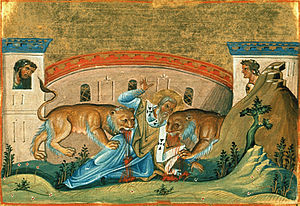
And although we do not know the details, this is the faith for which he would die, torn apart by the teeth of wild beasts in an arena.
A painting of St. Ignatius of Antioch being martyred by lions, c.1000 by Menologion of Basil II.
“Very truly, I tell you, unless a grain of wheat falls into the earth and dies, it remains just a single grain; but if it dies, it bears much fruit,” says Jesus in today’s reading from St. John. But this saying makes us uncomfortable. We do not want to be martyrs or even think about our deaths. Instead we want to turn this into an easier metaphor about how we live with one another. We immediately want to tame this saying, to leash it, to cage it, to make it less demanding.
But this is not what Jesus means. Jesus has just entered Jerusalem to loud Hosannas. Jesus knows he is going to die. And here, in the middle of St. John’s gospel, Jesus is ending his public ministry and beginning his farewell discourse. Jesus, in this chapter, says his hour has come, and that his soul is troubled. This saying is about dying. Dying on the cross. Dying in the teeth of wild beasts.
Like Jesus, St. Ignatius can lay down his life. St. Ignatius can only die faithfully because he lived faithfully. He can meet his death, because day after day he died to sin, and he witnessed the love of God for us in Jesus Christ. In the face of such love, death is nothing and Christ is everything.
THE FEAST OF THE TRANSFIGURATION
August 6, 2017
Trinity Episcopal Church
Searcy, Arkansas
Readings: Exodus 34.29-35
Psalm 99
2 Peter 1.13-21
Luke 9.28-36
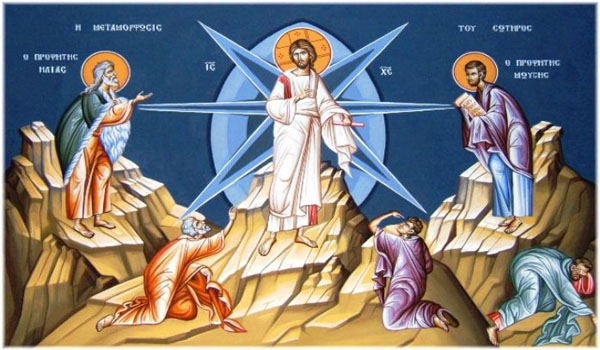
In today’s Gospel reading from Luke, Peter, James, and John, the iconic three disciples, are shown something beyond their wildest imaginations, something that stunned them, that shocked them, that no doubt confused them. They see Jesus transfigured in radiant light, dressed in dazzling white, speaking with Moses and Elijah on a mountain.
In that moment, they caught a glimpse of the divine nature of Jesus, the Word of God. This divine nature was always there–it wasn’t anything new, because Jesus had always been fully God and fully man. Maybe they had seen glimpses of it before on the road, as Jesus taught and healed the people. But they had never seen it quite like this.
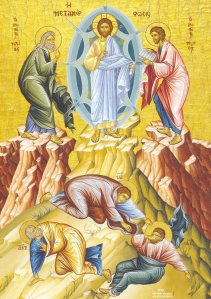
An icon of the Transfiguration.
Peter’s response has always stuck with me. Let us build three dwellings, one for each of you. Now why in the world would we do that? Peter, just a few verses earlier in the same chapter, had confessed that Jesus was the Messiah of God, the Christ. But he does not yet appear to understand what he confessed. He does not understand that Jesus is shining with the Light of who he is: God Incarnate. Peter, only a few verses earlier, had heard Jesus tell of his death and resurrection in Jerusalem. But he does not seem to understand that yet, either. Peter does all manner of works in the Name of Jesus, has seen healings and miracles and signs galore, confesses Jesus as the Messiah and is named the Rock on whom the Church will be built; and yet, Peter suggests building three dwellings, he will deny Christ three times, and he will flee as Jesus hangs on the cross.
Peter has seen a revelation of who Jesus Christ is. But his response reveals that he comes down off the mountain, not with clarity of vision and purpose, but confused, feeling his way in the dark, still trying to figure all of this out, maybe with more questions now than ever before.
St. Peter may be the patron saint of those of us who like to take two steps forward, one step back; those of us who feel our way in the dark, trusting in God, but maybe trusting in ourselves a little (or a lot) more; those, like me, who think we have it all figured out, the world by the tail, only to fall flat on our faces.
But, my friends, that’s what faith looks like. Faith is a journey with God. It is getting up each and every day and dedicating ourselves to continuing down this road with Jesus, even when–especially when–we don’t know where the road is going. Faith is putting all of our trust and hope in God, and knowing that we are forever held in that Love and Peace that passes all of our understanding, even when we have no understanding. Faith is returning to God, time and time again, when we fall down, when we can’t make out the future, when we get caught up in other things and neglect our relationship with God. Faith is not something static. No, faith is dynamic; it is something that grows in us as we grow into our relationship with God. Faith does not mean we have it all figured out. By no means! No, faith means we are going to stay on this path, we are going to put our hope in God and God alone, despite not understanding everything.
That’s St. Peter’s story. Two steps forward with Jesus, and then one step back. But then he gets up and continues on.
Faith like this takes incredible courage and strength. It is hard to trust, if we are honest with ourselves. If you’re like me, it is difficult, sometimes it feels impossible, to hand over the reins to someone else–even God Almighty! No, I’ll continue on my own. I’ll figure it out by myself. I’ve got this handled.
But when we realize that we can only depend on the grace of God to see us through; when we give God our concerns, our worries, our trials; when we make that difficult step, things begin to happen.
You know, searching for a rector, going through a transition like this for as long as you have, can seem like feeling your way in the dark. Maybe you feel a little bit like St. Peter on the mountain before the spectacular show of light, sitting there in the dark, not knowing quite what to do, perhaps feeling a little confused, just trying to stay awake. Or maybe you feel like St. Peter coming down from the mountain after the Transfiguration, still in the dark, still confused, still trying to figure it all out. It can be tempting to despair after a while, I think.
But Jesus is in this. Maybe, on this mountaintop of transition, he is showing you something deeper, calling you to a new place, preparing you for something new coming down the road. Maybe you won’t recognize it at first; it might take time to see the effects. There may not be clarity right now, and questions may remain; but Jesus is still the Chosen, and he’s still with us.
Look for Jesus. Keep walking with him. Put your faith in his never-failing grace and endless love. And prepare to be blown away by the unexpected.
So what more shall we say? Nothing new. But something true. Something ancient. Something divinely revealed to us that is so much greater than us. We believe in one God: the Father, the Son, and the Holy Spirit. And having confessed it by faith, we live it.
SERMON THE FEAST OF THE HOLY TRINITY St. Thomas’ Episcopal Church Springdale, AR Readings: Genesis 1.1-2.4a, Psalm 8, II Corinthians 13.11-13, Matthew 28.16-20
In the Name of God: Father, Son, and Holy Spirit. Amen.
Today is Trinity Sunday, the first Sunday after Pentecost. The Easter lilies, long out of bloom, are now a distant memory. Christ has died, been raised by God, and ascended into heaven to sit at the right hand of the Father. And as Jesus promised, the Comforter, the Holy Spirit, has indeed come among us, to guide and sustain us. We have entered the longest season of the Church year–the season after Pentecost–during which we will focus on the teachings of Jesus during his earthly ministry. And to kick things off, we have the Trinity, the cornerstone of the Christian faith and life, the mystery of one God in three persons: Father, Son, and Holy Spirit.
The Trinity is eternal, from everlasting, greater than and outside of time itself. In our reading from Genesis this morning, we see the Holy Trinity at work (Gen 1.1-2.4a). God the Father is at work in creation, guiding creation from nothingness to fullness, from a formless and dark void to light, to evenings and days, to seas and dry lands, to green vegetation and flowers and animals of all kinds, and finally to us, a people created in God’s very creative and life-giving and loving image. And we read that all of this is brought forth from the Word as creation is spoken into being. The opening to John’s Gospel reads, “In the beginning was the Word, and the Word was with God, and the Word was God” (Jn 1.1). And it is this very Word, eternally begotten of the Father, God from God, Light from Light, true God from true God–this Word will become incarnate from the Virgin Mary, to share our human nature, to live and die as one of us, and to reconcile us to God our Father. And we also see the Holy Spirit at work: A wind from God is sweeping over the face of the waters (Gen 1.2). This wind is the ruach, the breath, the spirit of God that was hovering, brooding over this creation-to-be. This is the wind we heard about last week, the Comforter Jesus had promised when he ascended to the Father: “When the day of Pentecost had come, the disciples were all together in one place. And suddenly from heaven there came a sound like the rush of a violent wind, and it filled the entire house where they were sitting” (Acts 2.1-2). This is the unpredictable fire of God that birthed the Church and catches us up in wonder still.
We see the Trinity at the baptism of Jesus in the Jordan. Jesus, the Son of God, the Word of God, comes to the Jordan to be baptized. And as he is, the heavens are torn open, God the Father speaks, “This is my Son,” and the Holy Spirit descends on him like a dove (Mk 1.9-11; Mt 3.16-17; Lk 3.21-22).
And it is this God in Trinity that Paul speaks of today as he blesses the people of Corinth: “The grace of the Lord Jesus Christ, the love of God, and the communion of the Holy Spirit be with all of you” (2Cor 13.13). This is the only instance where Paul blesses his readers with such an overt and clear trinitarian blessing, invoking all three persons of the Trinity.
Of course, the doctrine of the Holy Trinity as we understand it would come later, as faithful people wrestled with the testimony of the Scriptures and the Christian life, and as God revealed the mystery to them.
The word “revealed” seems to me to be of the utmost importance. The Trinity is not something clever that the Church came up with on its own. No, it is God’s revelation to us about who God is: One Being in three persons whom we have come to know and love and worship: Father, Son, and Holy Spirit. The One God testified to in the Scriptures, and the three persons also testified to in the Scriptures.
Long ago, our Church fathers and mothers wrestled with the question of the Holy Trinity. They structured our creeds around it. So everyday at the Daily Office when we say the Apostles’ Creed, we say, I believe in God, the Father…the Son…the Holy Spirit. And every Sunday at worship, we say the words of the Nicene Creed: We believe in one God, the Father… the Son… the Holy Spirit. And it is in these creeds and the Athanasian Creed that the Church has articulated what has been revealed to us about the Trinity by God.
What more shall we say? Truly, there is nothing left to say. Sometimes we have this urge to say something new, but there is nothing new under the sun–certainly nothing new about the Holy Trinity. And it is this impulse to say something new that can sometimes get us into trouble. Sometimes, even for the best reasons, we might say something outside the bounds of Christian doctrine–something other than what God has revealed to us.
Maybe you have seen that viral video on the Internet about St. Patrick and the Trinity? St. Patrick, the patron saint of Ireland, tries to explain the Trinity to a couple of seemingly backward Irishmen with crazy red hair. St. Patrick turns to metaphor: the Holy Trinity is like a clover with three branches but one stem, or like water that can be liquid, solid, or gas, and on and on. It’s so hard to explain a mystery of heavenly things with earthly things–you can’t explain it! So at each turn the Irishmen respond, no Patrick! Seemingly there is nothing Patrick can say except the words of the Athanasian Creed: “We worship one God in Trinity, and Trinity in Unity, neither confounding the Persons, nor dividing the Substance.” “Oh,” the Irishmen respond, “Why didn’t you say so, Patrick?”
What more shall we say, aside from the creeds, these gifts from God to Christ’s Church? Perhaps, as one English theologian wrote, silence is our safest eloquence for we mortals before the deep mystery of who the infinite God is (see Richard Hooker in Book I of Laws, cited in Rowan Williams, Anglican Identities (Lanham: Cowley Publications, 2003), 25-26).
So what more shall we say? Nothing new. But something true. Something ancient. Something divinely revealed to us that is so much greater than us.
We believe in one God: the Father, the Son, and the Holy Spirit.
And having confessed it by faith, we live it.
When we are baptized, we are adopted as children of God the Father and as brothers and sisters of Christ Jesus. We are invited to live in, to participate in the Life of the Trinity. And the Life of the Trinity is Love–boundless, endless, depthless, infinite Love of such generosity and vastness that it is constantly being poured out completely, yet it is never depleted by a single ounce. It is an unconstrained Love that breaks every barrier, that will never leave us, even as we pass from life to death. It is this Love that we receive, and it is only from this Love that we can love others. We can only love because God loves.
I was at a camp once talking to some young children, maybe around seven or eight years old, about the Trinity. There was one girl there who did not want to be there–or so it seemed. She sat there in some far-off la-la land, braiding her hair, fidgeting with her socks, untying and retying her shoes, messing with an ant that happened to be crossing the sidewalk. But then again, we were talking about the Trinity. Maybe she just wasn’t interested? She wouldn’t be the first child to find the subject confusing, or boring, or dull, or whatever. After we had all talked for awhile, I passed out some markers and paper, and we tried to draw a symbol for the Trinity. Some children drew venn diagrams of three overlapping circles; others drew triangles a lot like the triangle in the window above our altar here. The girl jotted something down, then turned the paper over and began to draw horses. Well, okay. You can’t win ‘em all. After a period of time we shared our drawings. I hesitated when I got to the little girl, not wanting to embarrass her. But she immediately stood up and brought her drawing over to me. She had drawn a big circle with four small, parallel lines in it. “Will you tell me about your drawing?” I asked. “Sure,” she replied. “The big circle is God, and inside it is the Father, the Son, the Holy Spirit, and me.”
The Father, the Son, the Holy Spirit, and me. I don’t know what Athanasius or Augustine or Aquinas would have said about her drawing. But in ten seconds of minimal effort she had got to a deep mystery. The infinite God invites us into God’s very Life of Love.
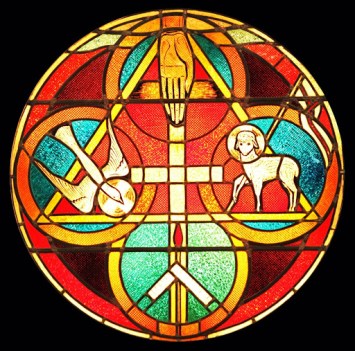
A representation of the Holy Trinity in the window above the altar and on the bishop’s cathedra at St. Thomas’ Episcopal Church in Springdale, Arkansas. The hand represents God the Father, the lamb God the Son, the dove God the Holy Spirit, and the carpenter square and spear St. Thomas.
Our own image of the Trinity here at St. Thomas’ does this in a different way. In the window above the altar, you can see a triangle within a circle, with each corner of the triangle representing a person of the Godhead. But coming from the heart of that triangle, from the heart of God, is a cross reaching down to us, bringing us to God. And that’s fitting, for the way of living in the Life of the Trinity is the Way of the Cross.
In our baptisms we are buried into this Life of Love, and then each day we take up our cross to live into this Life of Love all the days of our lives. We live in a Love that is overflowing and abundant, sacrifices all and never asks for anything in return; a love that is unconditional, complete, brave and bold and sure and vulnerable and open and willing to take a risk on you.
We can get a glimpse of what it looks like to live into this Life of Love in the eyes of the old woman who lives alone on the corner now, a block over from the old courthouse–maybe you know someone like her. Her name is Lucille, and she’s well into her nineties. She couldn’t be taller than four foot eight. Her husband died several years ago now. She has lived in the same house for well over fifty years; it’s foundation could use some work, the gutters could be cleaned, the shutters repainted. When you pass by, you’ll see her gardening, watering her ferns, sometimes even mowing her yard, or just sitting on the porch with a cup of coffee or a glass of lemonade. Or maybe you’ll pass by late at night or early in the morning; she doesn’t sleep much anymore. She’ll be kneeling at her couch with her Bible open, praying to God her old friend, calling out the names of her loved ones. Or you might see her on the square downtown, holding a basket of peanut brittle that her church sells to raise money. “The peanut brittle lady is here,” the courthouse employees will tell one another. They’ll go find her, usually sitting on a bench in the shade. These strangers will go for a bag of homemade peanut brittle, a bargain at $3. But they’ll get the warmest smile; they’ll hear her quiet laugh; they will hear her say, “I just love God so much, I love my little church, and I love you”; they’ll get a weak and frail yet powerful hug full of love. They will feel as if they have known her forever, even though they have just met; she’ll remind them of their grandparents and parents. The strongest and most hardened people will melt. They get more than they bargained for. They get a dose of the love of God.
I go by and see her when I’m in town. I drive up and see her sitting on her porch. Whenever she sees me coming, the biggest smile spreads across her wrinkled face. “I just love you so much,” she will say with a little laugh. “You know, I’ve been praying for you.” And you know she has, because you can feel it deep within your soul.



 Storied Grace